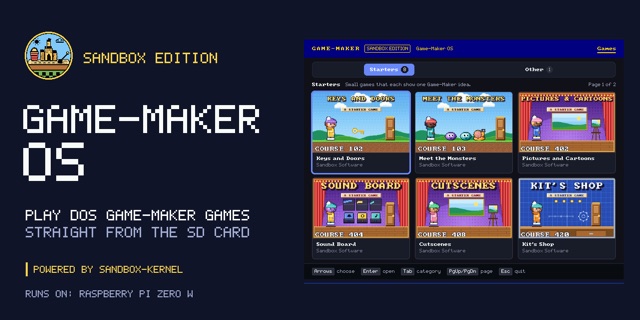
Ghost Jack read the Pi's games list in the dark, my bare-metal kernel played its first sound over HDMI, my agents made a Pi keyboard build safe, my GitHub repos got an Archive page, and Game-Maker: Sandbox Edition site 3.4.0 shipped.
In the post: night shots from the $2 camera, F5 and F6 saves on the Pi, the new screens on the pocket player, the sweep that gave about a hundred repositories social previews, weekly burn-down charts for my AI usage, and a release that stalled once before it went out. The full write-up is on my blog.
On Sunday I taught an agent to draw hands from a photo, let a phone video explain why a Pi kept rolling back, and turned a thrift-store camera into Ghost Jack, which now watches the Pi's screen. Game-Maker: Sandbox Edition site 3.3.0 is out.
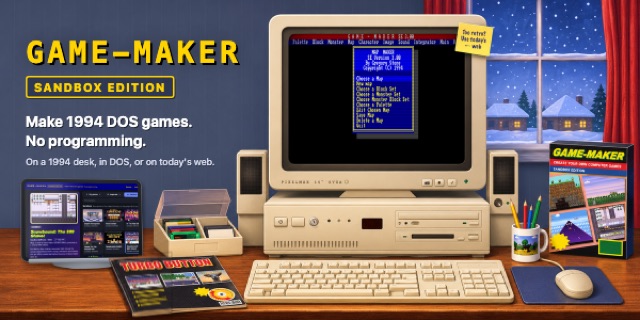
Game-Maker: Sandbox Edition reached site version 3.2.0. In this post I describe a day where AI agents wrote most of the code while I directed: a Raspberry Pi that runs Game-Maker games, an improved Pocket Player, and other features.
THE CHEZ is a small Vite and TypeScript app that tests whether the Game-Maker Sandbox engine can be installed from npm and run in a project of its own. Its bundled sample game, The Stripe Hypothesis, is there to prove the integration: Doc Leo swears racing stripes make THE CHEZ faster, Teddy has doubts, and the speedometer gets the last word.
Version 0.2.0 now takes the engine, archive, and tools packages from npm. The game downloads as one ZIP and is unpacked by the archives package.
A missed jump in a DOS game remake led to better playtesting tools and a closer look at how I work with AI agents. Along the way, RSD Game-Maker spilled off the screen into decoder wheels and printable models.
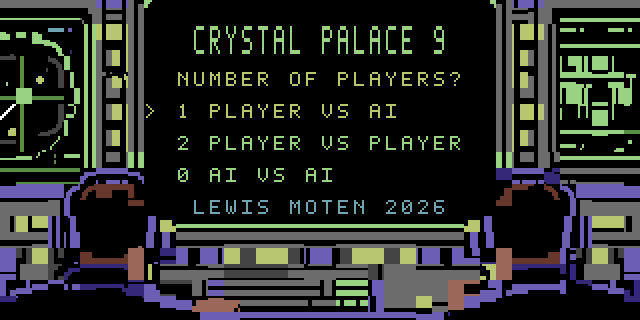
Crystal Palace 9, my Commodore 64 tic-tac-toe game, now runs on Falken-9, a new model I trained for the C64's arithmetic and memory from the start. The whole 5,195-byte model stays in RAM, so a complete AI-vs-AI game takes just over a minute in an emulator. The earlier model took about 20 minutes.
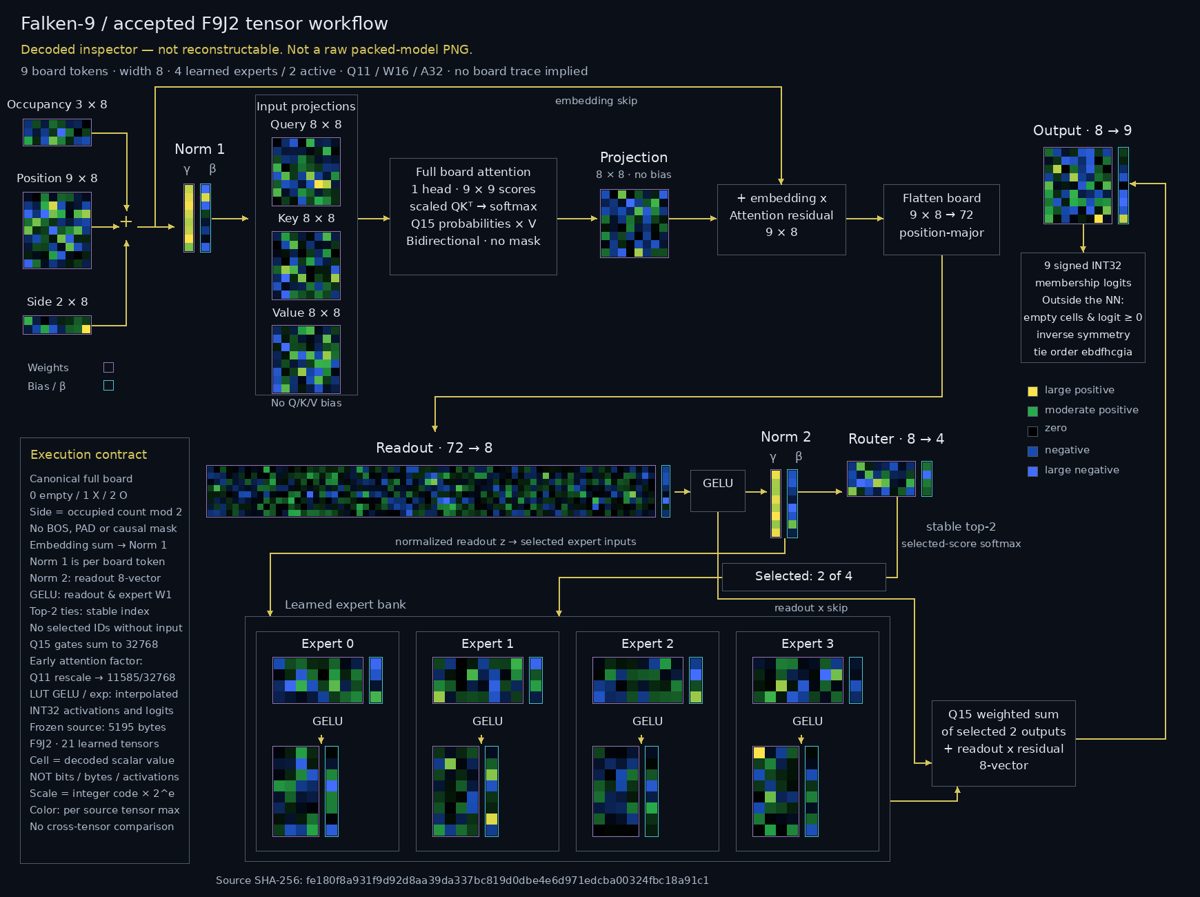
The second picture is the tensor workflow: every decoded weight, from the board embeddings through attention, the router and the four experts. The research report probes the network with interventions and charts what it found.
After decades of remembering the DOS games I made as a teenager, I used parallel AI agents to bring RSD Game-Maker to the web, preserving its formats while building new games, paper extras, and a nostalgic world around it.
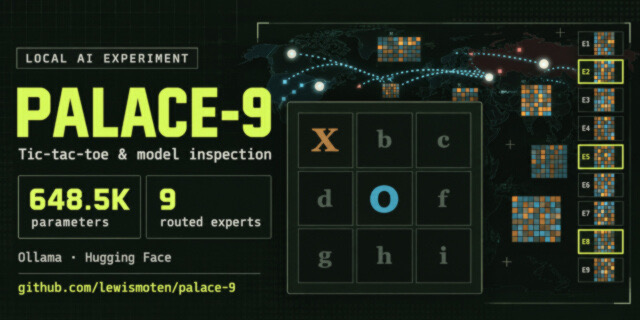
I trained a small tic-tac-toe model, Palace-9, ran into visualization, training, and tokenizer problems along the way, and planned a smaller follow-up called Crystal-9. Crystal-9 later became the model behind Crystal Palace 9 on the Commodore 64.